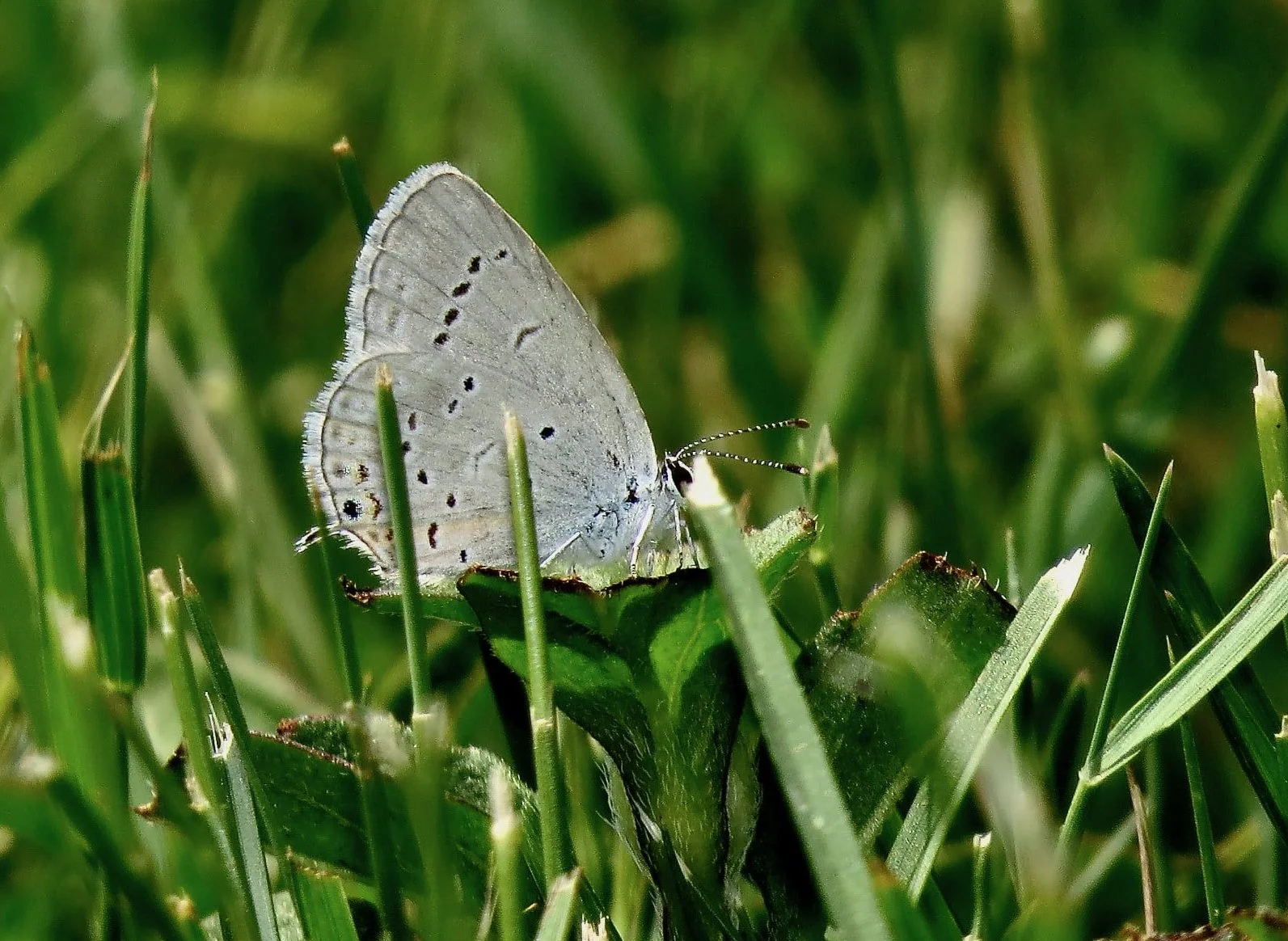
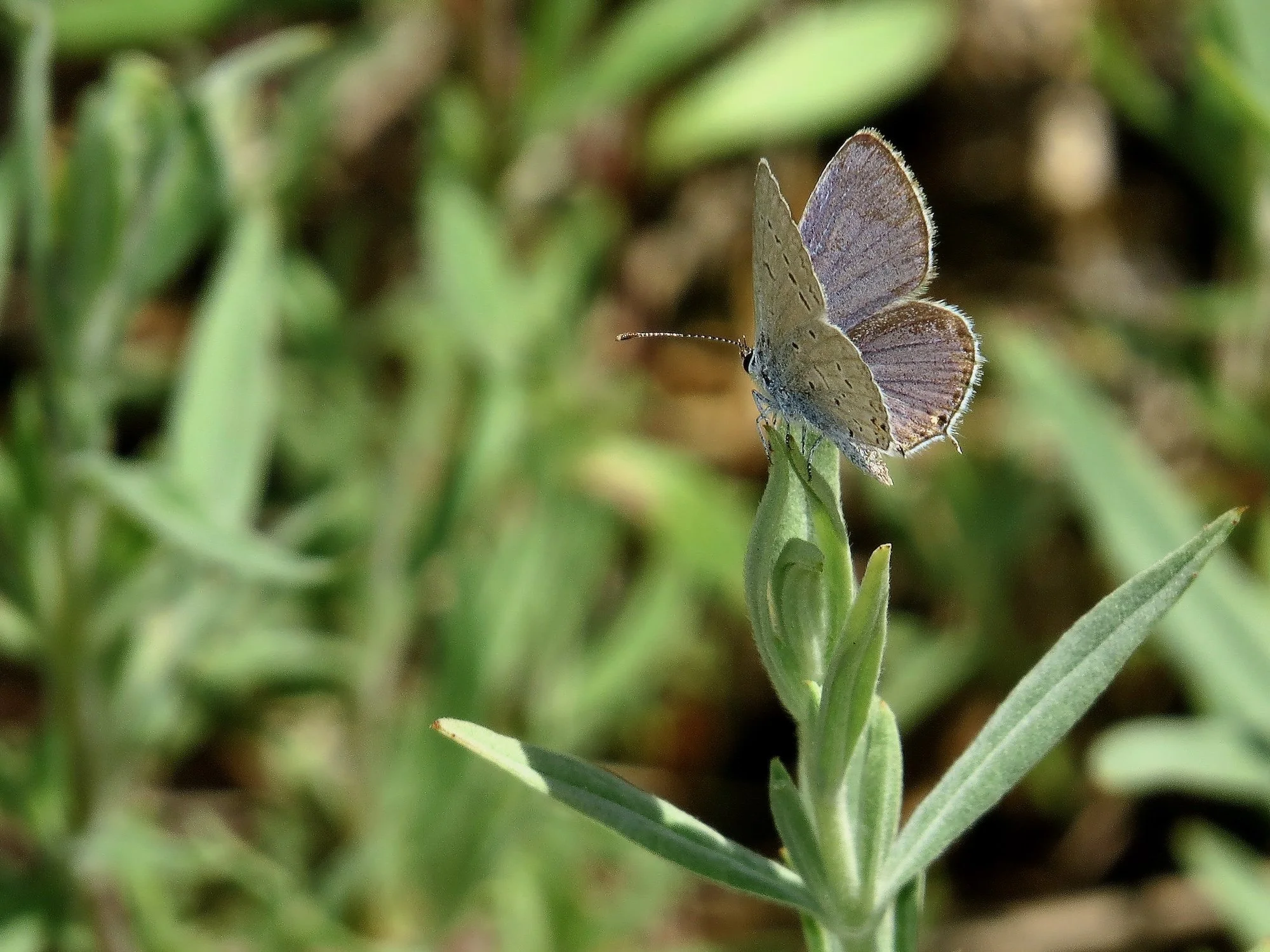
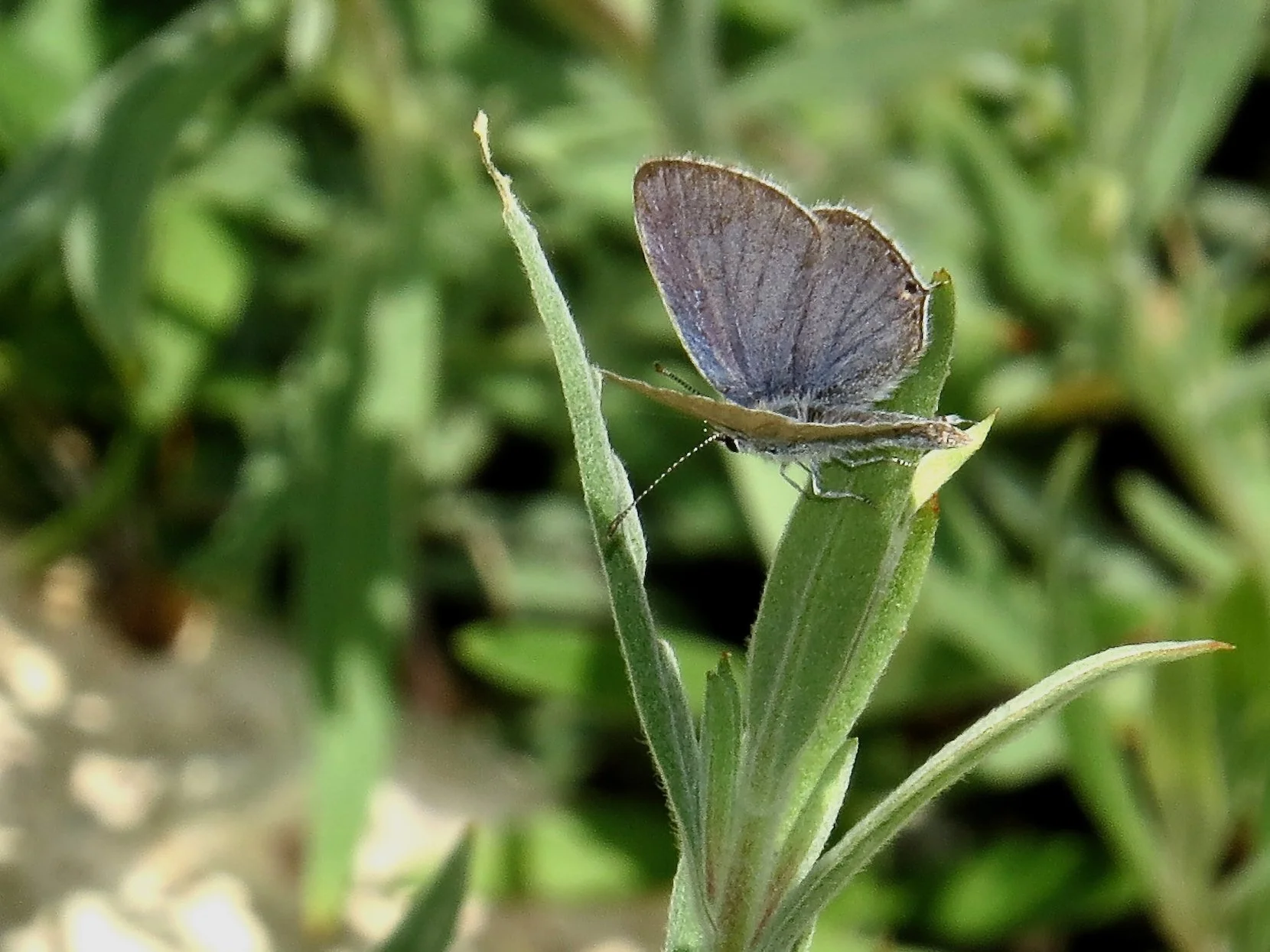
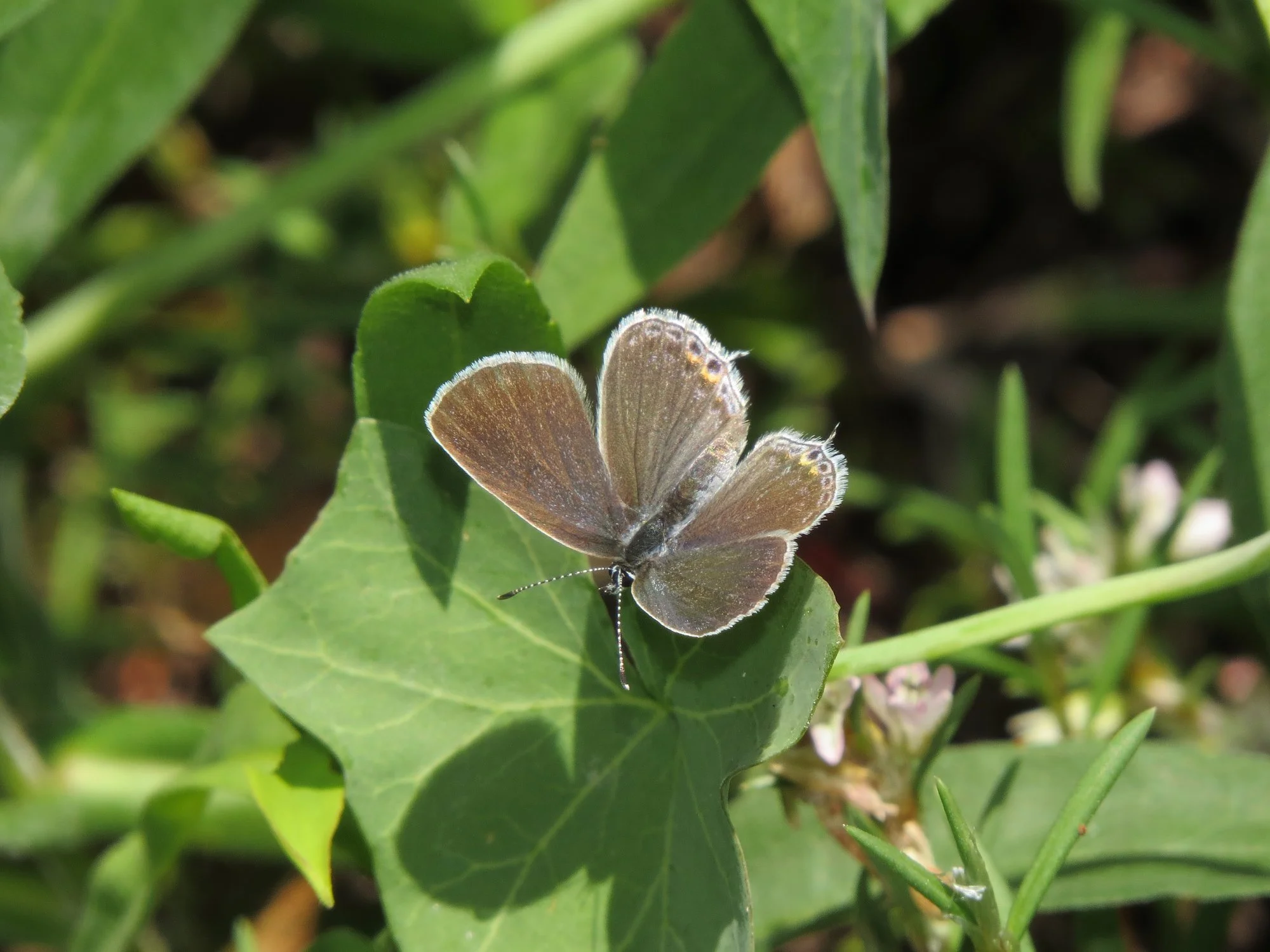
Western Tailed-Blue (Cupido amyntula) is a small butterfly, with a wingspan of 0.875 to 1.125 inches. It is very rarely seen in our local area. As of April 2026, there are only 4 observations from East Bay on iNaturalist. It usually flies from April to August. Host plants consist of legumes with inflated seed pods, including False Lupine (Thermopsis), Milkvetch (Astragalus), Crazyweed (Oxytropis), and Vetches (Vicia and Lathyrus).
Females lay eggs on flowers or young seed pods of the host plant. Caterpillars seem to live entirely inside the seed pods. They eat young seeds, and can be cannibalistic when crowded. Fourth-instar caterpillars overwinter inside the pod, and pupate in the spring.
Like Gray Hairstreak, and Acmon Blue, it has a mutualistic relationship with ants (both species benefit). The ants protect the caterpillars from predators in exchange for the sweet “honeydew” the caterpillars secrete from a nectary gland. Roughly three-fourths of butterflies in the Lycaenidae family have a relationship with ants, but not always mutualistic.
This butterfly is found primarily in the Western third of North America, from Alaska to Baja California, as well as in northern Michigan, and Ontario province in Canada. There are scattered sightings from further east.