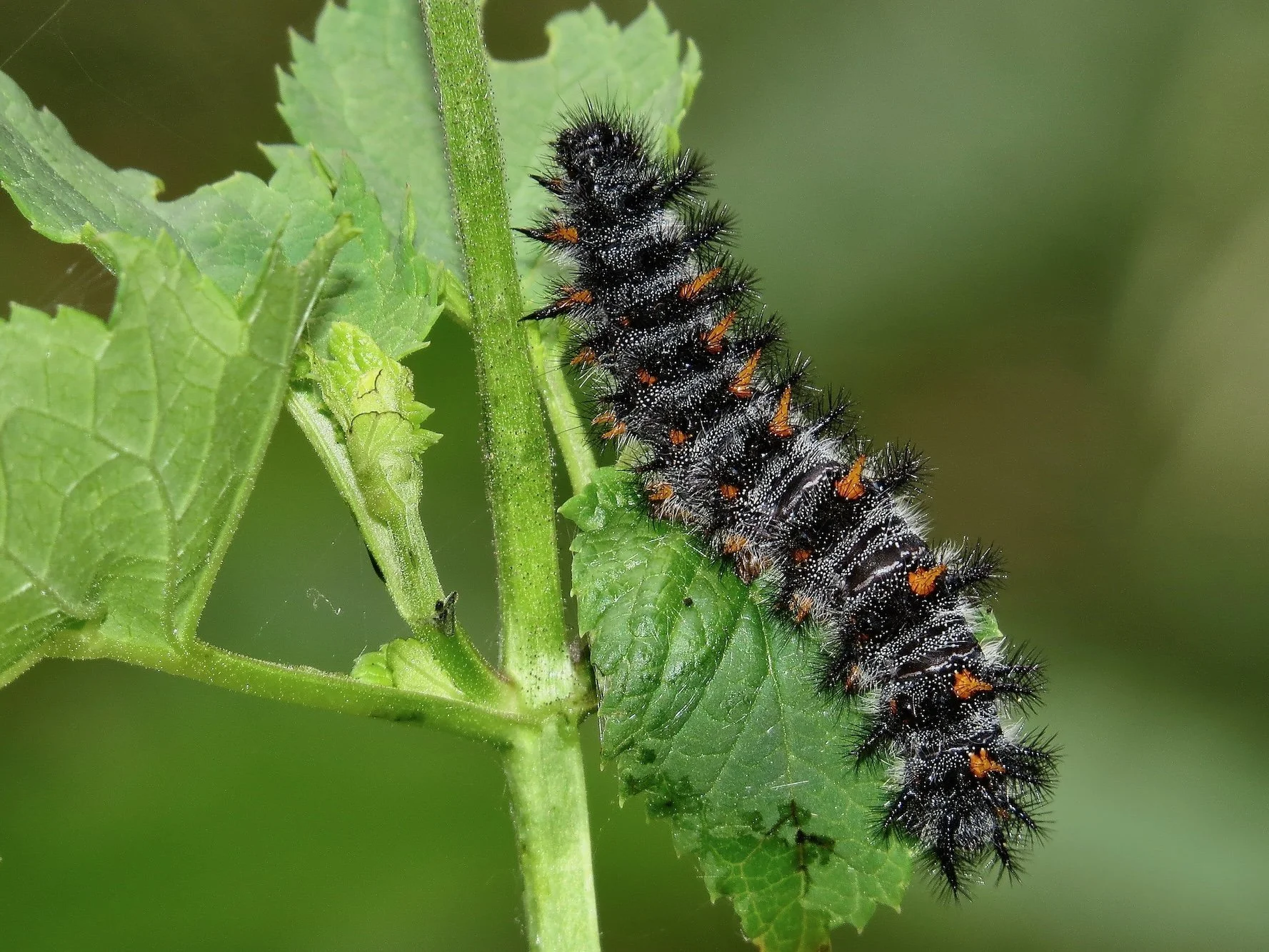
Variable Checkerspot (Euphydryas chalcedona) is a small-medium butterfly, with a wingspan of 1.25 to 2.25 inches. In our local area, it can usually be seen from April through June. Numbers peak in April-May. Before 2024, it had been seen in July only in 2023, when all butterflies appeared late, due to quirky weather in the spring. But in 2024, it was sighted in the Garden twice in July. Host plants include several plants that were formerly classified as Scrophulariaceae, including Sticky Monkeyflower (Diplacus aurantiacus, Phrymaceae), Penstemon (Plantaginaceae), Paintbrush (Castilleja, Orobanchaceae). These plants are all rich in catalpol, a chemical compound that makes the butterfly unappetizing to birds.
Partially grown caterpillars overwinter (overwintering is a state of dormancy akin to hibernation), hiding under rocks or in litter. The season begins with sightings of these overwintering caterpillars in February. Adults live for about 15 days. Males are highly territorial. (BAMONA — Butterflies and Moths of North America — says “Third- and fourth-stage caterpillars hibernate“, but that wording needs to be revised in the light of recent observations of much smaller caterpillars at the start of the season.)
It is a North American butterfly, found primarily on the west coast, from Alaska in the north to Baja California in the south. However, the range extends east into Colorado, Montana, New Mexico and Wyoming. The appearance is variable across different parts of its range, rather than across individuals in a given area.