|
30th Anniversary Celebration and Campaign ͏ ͏ ͏ ͏ ͏ ͏ ͏ ͏ ͏ ͏ ͏ ͏ ͏ ͏ ͏ ͏ ͏ ͏ ͏ ͏ ͏ ͏ ͏ ͏ ͏ ͏ ͏ ͏ ͏ ͏ ͏ ͏ ͏ ͏ ͏ ͏ ͏ ͏ ͏ ͏ ͏ ͏ ͏ ͏ ͏ ͏ ͏ ͏ ͏ ͏ ͏ ͏ ͏ ͏ ͏ ͏ ͏ ͏ ͏ ͏ ͏ ͏ ͏ ͏ ͏ ͏ ͏ ͏ ͏ ͏ ͏ ͏ ͏ ͏ ͏ ͏ ͏ ͏ ͏ ͏ ͏ ͏ ͏ ͏ ͏ ͏ ͏ ͏ ͏ ͏ ͏ ͏ ͏ ͏ ͏ ͏ ͏ ͏ ͏ ͏ ͏ ͏ ͏ ͏ ͏ ͏ ͏ ͏ ͏ ͏ ͏ ͏ ͏ ͏ ͏ ͏ ͏ ͏ ͏ ͏ ͏ ͏ ͏ ͏ ͏ ͏ ͏ ͏ ͏ ͏ ͏ ͏ ͏ ͏ ͏ ͏ ͏ ͏ ͏ ͏ ͏ ͏ ͏ ͏ ͏ ͏ ͏ ͏ ͏ ͏ ͏ ͏ ͏ ͏ ͏ ͏ ͏ ͏ ͏ ͏ ͏ ͏ ͏ ͏ ͏ ͏ ͏ ͏ ͏ ͏ ͏ ͏ ͏ ͏ ͏ ͏ ͏ ͏ ͏ ͏ ͏ ͏ ͏ ͏ ͏ ͏ ͏ ͏ ͏ ͏ ͏ ͏ ͏ ͏ ͏ ͏ ͏ ͏ ͏ ͏ ͏ ͏ ͏ ͏ ͏ ͏ ͏ ͏ ͏ ͏ ͏ ͏ ͏ ͏ ͏ ͏ ͏ ͏ ͏ ͏ ͏ ͏ ͏ ͏ ͏ ͏ ͏ ͏ ͏ ͏ ͏ ͏ ͏ ͏ ͏ ͏ ͏ ͏ ͏ ͏ ͏ ͏ ͏ ͏ ͏ ͏ ͏ ͏ ͏ ͏ ͏ ͏ ͏ ͏ ͏
Friends of the Regional Parks Botanic Garden 30th Anniversary and Rock Garden Campaign Botanic Hotspots of Northern California: Talks by Dr. Glenn Keator July Butterfly Walks in the Botanic Garden Birds in the Botanic Garden Garden Tours PLEASE BE AWARE - the following roads will be CLOSED - no cars, no bicycles - for 24 hours from early morning on Saturday, July 4 to early morning on Sunday, July 5 for fire concerns: Grizzly Peak Boulevard (from Fish Ranch Road to Centennial/Golf Course Road). South Park Drive (from Wildcat Canyon Road to Grizzly Peak Boulevard). Lomas Cantadas Road (from Orinda to Grizzly Peak Boulevard). NOTE: The Garden will be open on July 4th from 8:30 a.m. to 5:30 p.m. Wildcat Canyon Road will be open, Golf Course Road will be open, and Shasta will be open! This information is also posted on the Garden website. Above: Southern California Section of the Botanic Garden by Sandy Steinman.
|
Friends of the Regional Parks Botanic Garden 30th Anniversary and Rock Garden Campaign
|
|
The Anniversary Celebration is on Saturday, August 22, 5:30-7:30, after the Garden is closed to the public. This Friends-only event will be in the Botanic Garden, with catered food, music and speakers. It will honor special guest Glenn Keator, who was instrumental in starting the Friends organization. The email invitation will be sent to all Friends of the Garden soon; be on the lookout for it! And—if you ‘d like to join the Friends and receive the invitation, you can join HERE. In conjunction with the 30th anniversary, the Friends are launching a campaign to raise funds for an exciting new rock garden and a renovated West Gate entrance.
|
|

|
The goal is to raise $30,000 of the projected cost. We welcome supporters at every level—click HERE to see how you can make a difference! Sketch of the West Gate Rock Garden by Luke Hass. |
|
|
Botanic Hotspots of Northern CaliforniaNorthern California features the most diverse floras of the world, and much of that diversity is found in well-defined hotspots. This month, Glenn Keator offers a series of free presentations from 10:00 a.m. to 12:00 p.m. at the Botanic Garden Visitor Center. July 12 THE SMITH RIVER WATERSHED The watershed of the Smith River, California’s most northerly, undammed river, encompasses wetlands and sea promontories and extends into deep forested canyons with peaks rising to 5,000 feet. It is home to many special endemics.
July 19 COOK AND GREEN PASS Just short of the Oregon border, 5000-foot Cook and Green Pass has an unparalleled diversity combining lowland species with high and subalpine species in a series of forests, meadows, and rock outcrops. The name "Cook and Green" is derived from Robert Cook and William A. Green, Hudson Bay trappers and settlers of Seiad Valley, California in the 1850s. Green was the first postmaster in Seiad in 1858-61.
|
|
|
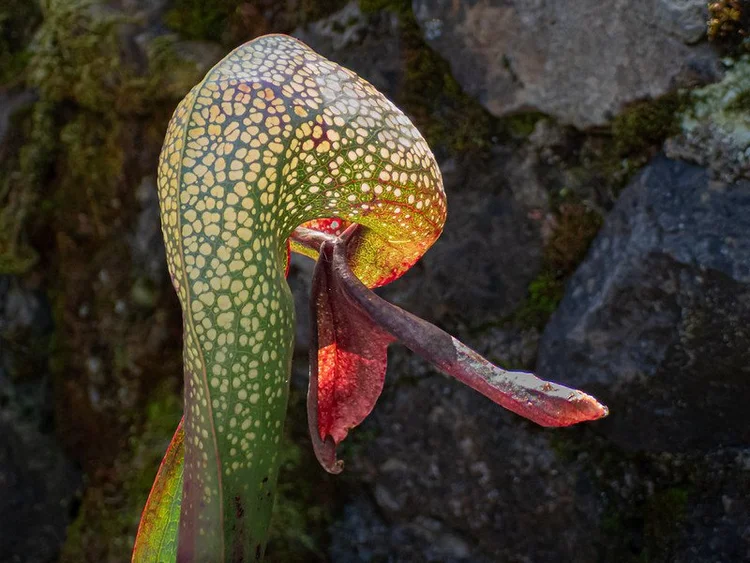
July 26 MT. EDDY The highest point in the Klamath Mountains at 9,000 feet, Mt. Eddy is a serpentine area featuring lakes, large meadows, a range of interesting conifers, and true alpine habitat. It is also home to vast populations of the curious insectivorous cobra plant, Darlingtonia californica. California pitcher plant (Darlingtonia californica) by Sandy Steinman. |
|
|
July Butterfly Walks in the Botanic Garden
|
|
Join Sarab Seth for guided butterfly walks in the Regional Parks Botanic Garden on Sunday, July 19th, and Wednesday, July 22nd. Two walks are scheduled each day at 1:00 p.m. and 2:15 p.m. Each walk is limited to ten participants and starts at the Garden’s Wildcat Canyon Entrance. Walks are free, but reservations are required. Reserve here. From Sarab’s Notebook: June, July, and August are usually the best months for butterflies in the Garden. On good-weather days, butterfly activity in June was at normal levels. But, at this time of year, the weather is very variable. How many different species, and how many butterflies in all, are seen on a given day depends very much on what the weather turns out to be. Under good conditions— sunny, at least 65 degrees, and not too windy — I expect to see roughly 10 species over one hour. Likely sightings on the July walks include acmon blue (Icaricia acmon), cabbage white (Pieris rapae), California pipevine swallowtail (Battus philenor hirsuta), field crescent (Phyciodes pulchella), mylitta crescent (Phyciodes mylitta), and umber skipper (Lon melane). Satyr comma (Polygonia satyrus) and fiery skipper (Hylephila phyleus) are both possible. Where to Look Right Now (If You Can’t Join the Walks): The best spot right now is still the area around the large circular bed in the Channel Island section, although the number of species seen here fluctuates. Expect to see acmon blue, cabbage white, mylitta crescent, and umber skipper, as well as California pipevine swallowtail fly-bys. The area surrounding the lawns below the Channel Island section has also been quite good lately. Numbers for California pipevine swallowtail adults have bounced back a bit. The large California pipevine (Aristolochia californica) plant on the east side of the long bridge still has a few late-stage caterpillars. There are younger caterpillars at two other California Pipevine plants. One is at the first small bridge you come to as you walk west from the Visitor Center. The other is on the north edge of the Franciscan section, at the bottom of the steps when you take the path down from the greenhouse to Wildcat Creek (on the south side of the little wash). There are several chrysalises on the long bridge and on the Chrysalis Shed (on the upper path, just south of the Channel Island section). Tip: Binoculars help a lot, especially close-focus ones. The happiest people at the end of the walk are usually the ones who brought them! Want a virtual walk? See the butterfly pages on the Garden website at: https://nativeplants.org/guides/butterflies-in-the-garden
|
|
LEFT: acmon blue; CENTER: field crescent; RIGHT: umber skipper. Photos by Sarab Seth. Sarab Seth is a butterfly photographer and docent at the Botanic Garden. Sarab's monthly Garden butterfly walks will continue through October.
|
Birds in the Botanic GardenElke Glendenning This is a magical time of year in the Botanic Garden. Water is flowing in Wildcat Creek, the columbine are blooming, berries are ripening, and the birds are very active.
|

|
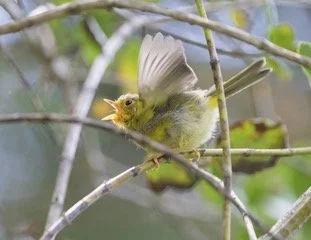
Breeding season is in full swing, and there are signs of it everywhere. Some birds, like the Lesser Goldfinch and Western Flycatcher, are still nesting. Other young birds—fledglings—have left the nest and are now hopping, fluttering, and flying around the Garden. On a recent visit I was delighted to see Wilson’s Warbler, Orange-crowned Warbler, and Black Phoebe fledglings. Left: Western Flycatcher. |
|
|
Next time you visit, listen carefully for the sounds of fledglings. Their calls can be wheezy, high-pitched, and repetitive, often increasing in volume as the parent approaches with food. If you are patient and quiet, they may come into view. Right: Wilson’s Warbler fledgling. |
|
|
|

|
Left: Wilson’s Warbler Feeding fledgling. |
|
|
|
The main stone bridge over Wildcat Creek is a wonderful place to watch birds. They come to the creek to drink and bathe, and will often perch in the bushes nearby. If you stay for a while, you will likely be rewarded with numerous bird sightings and perhaps even be serenaded.
|
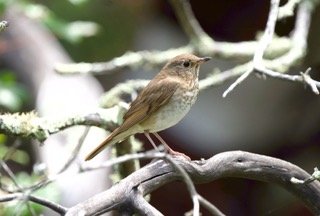
The ethereal, upward-spiraling song of the Swainson’s Thrush can be heard throughout the Garden. Right: Swainson’s Thrush |
|
|
|
|
Birds love the berries that are ripening throughout the Garden. Spend some time by the dogwoods near the pond or the thimbleberry bushes along the edges of the Sequoia Grove, and you may see an American Robin or Swainson’s Thrush foraging. If you notice a bird carrying a berry instead of eating one, it is likely gathering food for its young. A cluster of huckleberry bushes by the main bridge is currently attracting plenty of attention, and, of course, manzanita berries can be found throughout the Garden. What a gift it is to share this paradise with the birds! Elke Glendenning is a Garden Greeter at the Botanic Garden, and a California naturalist. She is currently enrolled in the California Academy of Sciences/GGBA Master Birder Program. All photos were taken in the Botanic Garden by birder and wildlife photographerJack Hayden, Birder and Wildlife Photographer.
|
|
You're invited to our free, docent-guided tours every weekend and on Park District holidays! Explore the Garden sights with us on Saturdays and Park District holidays at 2:00 p.m. and Sundays at 11:00 a.m. and 2:00 p.m. Meet at the Visitor Center, no need to sign up. And, you can book a tour for your group: find a request form HERE.
The Botanic Garden is bursting with color. Visit soon to enjoy the lingering blossoms of spring as we head into summer. See below for a sneak peek at what’s currently in bloom.
|
|
|
|
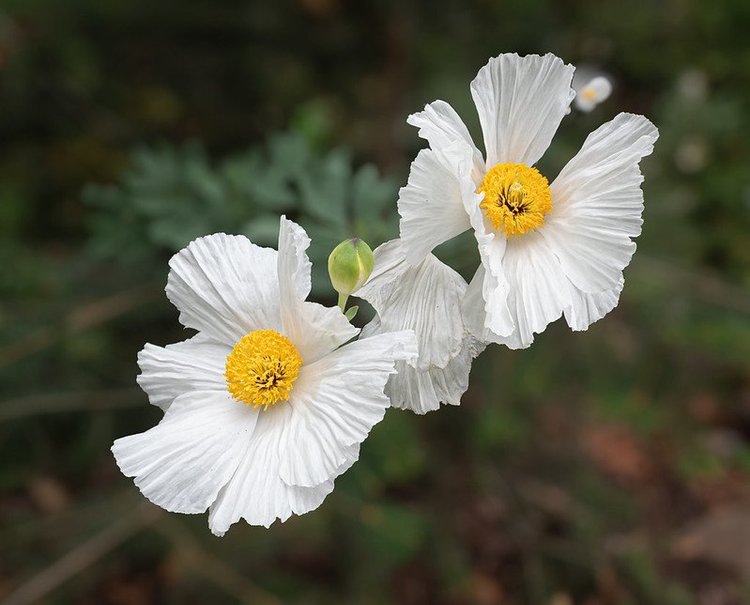
Matilija poppy (Romneya coulteri) |
|
|
|
|
|
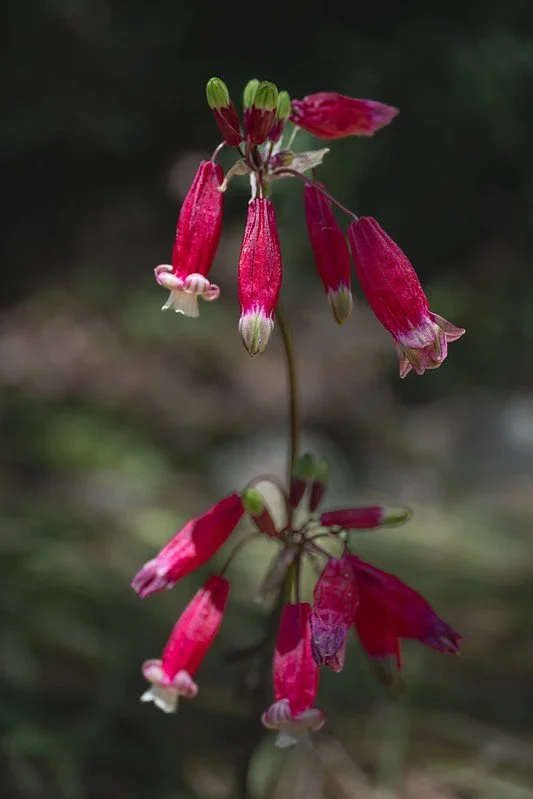
Firecracker flower, also known as Firecracker brodiaea (Dichelostemma ida-maia). |
|
|
|
|
|
|
|
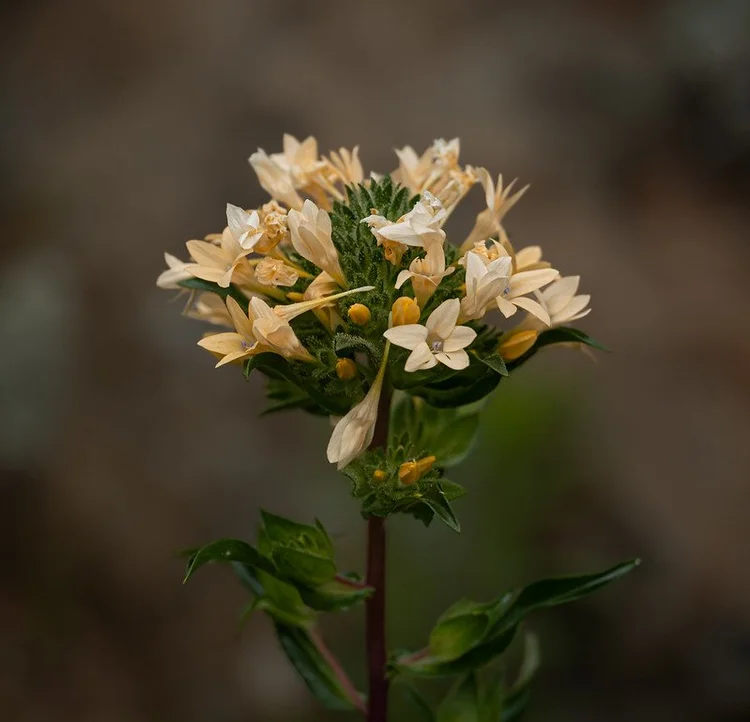
Large flowered collomia (Collomia grandiflora). |
|
|
|
|
|
Salmon flowered prickly pear (Opuntia littoralis vaseyi). Photos by Sandy Steinman. |
|

|
|
|
|
|
|
|



