Wayne Roderick Lecture Series; Native Peoples and Plants Tour ͏ ͏ ͏ ͏ ͏ ͏ ͏ ͏ ͏ ͏ ͏ ͏ ͏ ͏ ͏ ͏ ͏ ͏ ͏ ͏ ͏ ͏ ͏ ͏ ͏ ͏ ͏ ͏ ͏ ͏ ͏ ͏ ͏ ͏ ͏ ͏ ͏ ͏ ͏ ͏ ͏ ͏ ͏ ͏ ͏ ͏ ͏ ͏ ͏ ͏ ͏ ͏ ͏ ͏ ͏ ͏ ͏ ͏ ͏ ͏ ͏ ͏ ͏ ͏ ͏ ͏ ͏ ͏ ͏ ͏ ͏ ͏ ͏ ͏ ͏ ͏ ͏ ͏ ͏ ͏ ͏ ͏ ͏ ͏ ͏ ͏ ͏ ͏ ͏ ͏ ͏ ͏ ͏ ͏ ͏ ͏ ͏ ͏ ͏ ͏ ͏ ͏ ͏ ͏ ͏ ͏ ͏ ͏ ͏ ͏ ͏ ͏ ͏ ͏ ͏ ͏ ͏ ͏ ͏ ͏ ͏ ͏ ͏ ͏ ͏ ͏ ͏ ͏ ͏ ͏ ͏ ͏ ͏ ͏ ͏ ͏ ͏ ͏ ͏ ͏ ͏ ͏ ͏ ͏ ͏ ͏ ͏ ͏ ͏ ͏ ͏ ͏ ͏ ͏ ͏ ͏ ͏ ͏ ͏ ͏ ͏ ͏ ͏ ͏ ͏ ͏ ͏ ͏ ͏ ͏ ͏ ͏ ͏ ͏ ͏ ͏ ͏ ͏ ͏ ͏ ͏ ͏ ͏ ͏ ͏ ͏ ͏ ͏ ͏ ͏ ͏ ͏ ͏ ͏ ͏ ͏ ͏ ͏ ͏ ͏ ͏ ͏ ͏ ͏ ͏ ͏ ͏ ͏ ͏ ͏ ͏ ͏ ͏ ͏ ͏ ͏ ͏ ͏ ͏ ͏ ͏ ͏ ͏ ͏ ͏ ͏ ͏ ͏ ͏ ͏ ͏ ͏ ͏ ͏ ͏ ͏ ͏ ͏ ͏ ͏ ͏ ͏ ͏ ͏ ͏ ͏ ͏ ͏ ͏ ͏ ͏ ͏ ͏ ͏ ͏
Friends of the Regional Parks Botanic Garden

THE BOTANIC GARDEN NEWSLETTER
November 2025

  • Wayne Roderick Lecture Series Begins Saturday, November 1

  • California Native Peoples and Plants Tour Sunday, November 2

  • Denver Botanic Gardens Receives Ferns Propagated by RPBG

  • Weekly and Monthly Plant Sales: Dudleyas

  • Garden Tours and Sights

Wasatch maple (Acer grandidentatum); photo by Sandy Steinman.

Visitors please note:

South Park Drive, running between Wildcat Canyon Road at the Botanic Garden to Grizzly Peak Boulevard, will be closed for the annual newt migration from November 1 to March 31.

The Garden’s Canyon section has reopened. The erosion control project has been completed, and visitors can view the impressive changes.

The Garden will be closed on Thursday, November 27, for the Thanksgiving holiday.


Wayne Roderick Lecture Series

Join us for our popular Wayne Roderick Lecture Series on a broad array of topics related to plants and natural history. Named in honor of its founder, the Wayne Roderick Lecture Series takes place on Saturday mornings starting at 10:30 a.m. in the Botanic Garden Visitor Center auditorium. These presentations are enjoyable for beginners and professionals alike. All lectures are free and open to the public. The first two lectures are listed below; the full list will be posted on the Garden website.

Saturday, November 1, 10:30 a.m.

Bart O’Brien, Director of the Regional Parks Botanic Garden, opens the 2025-6 Wayne Roderick lecture series with: “Botanical and Horticultural Potpourri: What’s Occupied My Mind This Past Year.”

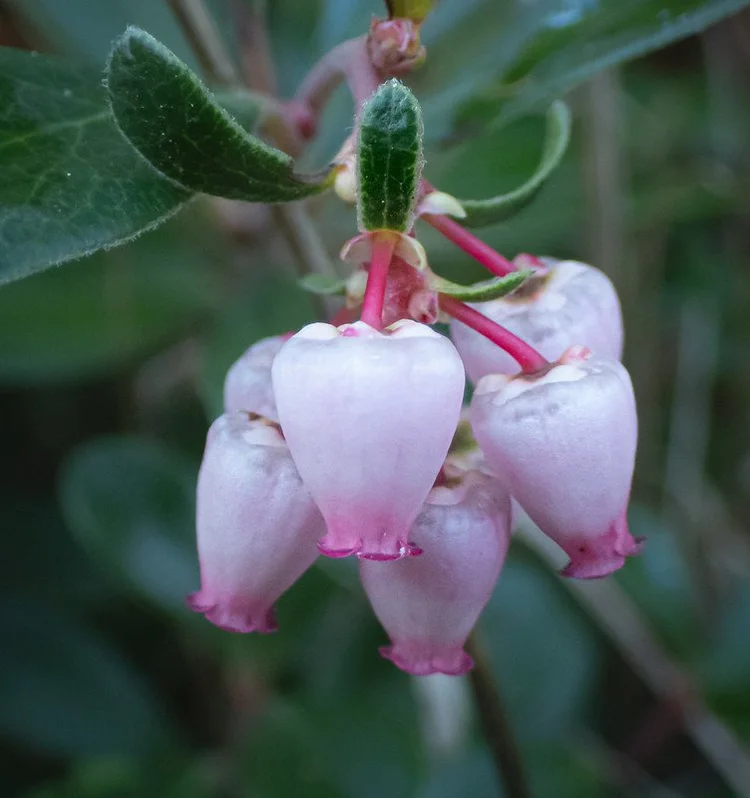
Bearberry (Arctostaphyllos uva-ursi) photo by Sandy Steinman.

Saturday, November 8, 10:30 a.m.

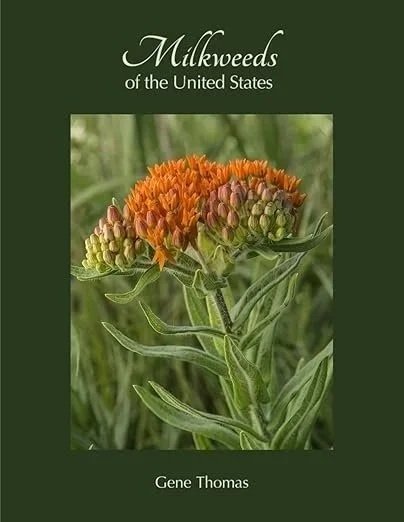
Gene Thomas will speak about his recent book, Milkweeds of the United States.

Gene Thomas, avid gardener and propagator, studied plant pathology and breeding and taught microbiology, biology, and environmental science at Solano Community College.


California Native People and Plants Tour: Sunday, November 2, 2:00 p.m.

Visit the Botanic Garden for this special family-friendly tour. Participants will observe Native American artifacts, learn about plants that are also food sources, play the traditional Miwok game of staves, grind acorns, and wash hands with soaproot.

No registration required; rain cancels. Meet at the Garden Visitor Center. Directions.

Acorns, mortar, and pestle; photo by John Rusk.


The Great Rare Fern Transfer: From the Regional Parks Botanic Garden to the Denver Botanic Gardens

David Sherertz

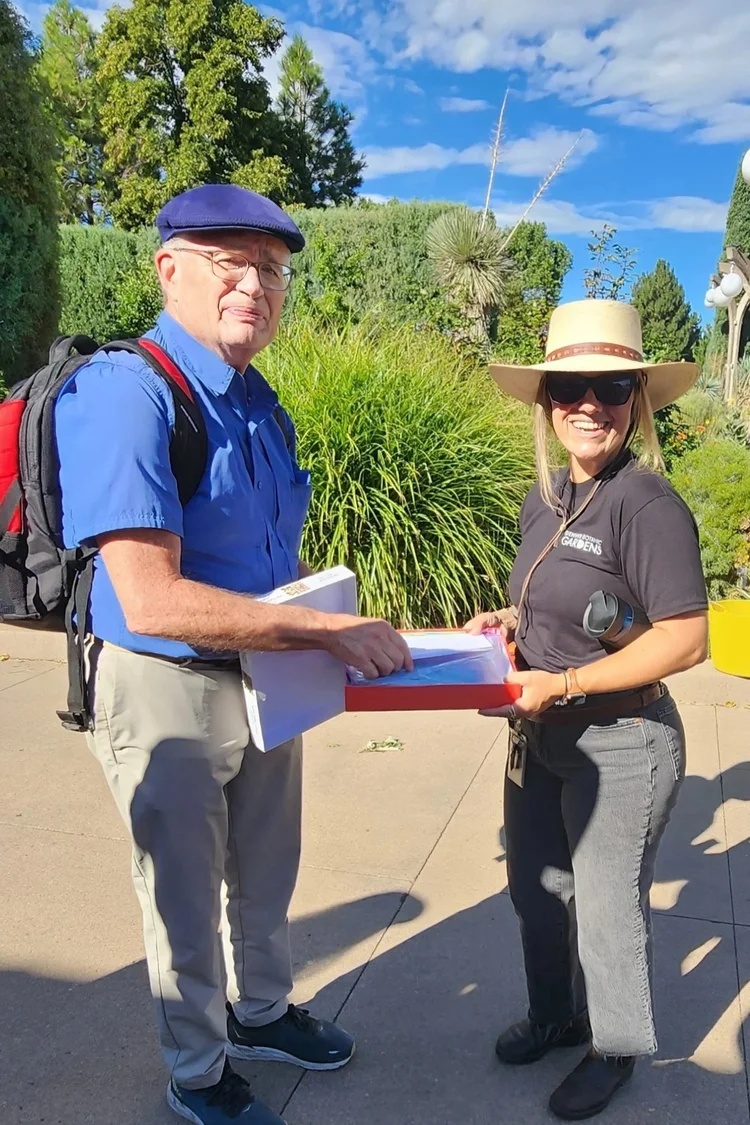
As part of a planned family trip to Denver and Rocky Mountain National Park last month, Roz Hardy and I, both docents at the Regional Parks Botanic Garden (RPBG), decided we would visit the Denver Botanic Gardens (DBG).

We asked RPBG director, Bart O’Brien, if he could arrange any special tours for us through his many contacts there. Bart reached out to Kiamara Ludwig, who propagates ferns, bryophytes, and many more species at the Garden.

Kiamara had recently visited DBG for a conference, spoken with their horticulturists, and discovered that the Denver garden had no Cheilanthoid ferns. Cheilanthoids are the most commonly found fern species in the arid southwest and other xeric habitats throughout the world. Kiamara offered to send three of these rare desert ferns—species the DBG had long struggled, unsuccessfully, to cultivate. Kiamara had several of those ferns thriving at the RPBG and was happy to share some.

The ferns had been grown from spores collected from the Mojave Desert National Preserve with the assistance of park botanist Drew Kaiser. One of the requirements of the permit issued to collect the spores was that any plants successfully grown could go only to approved botanic gardens.

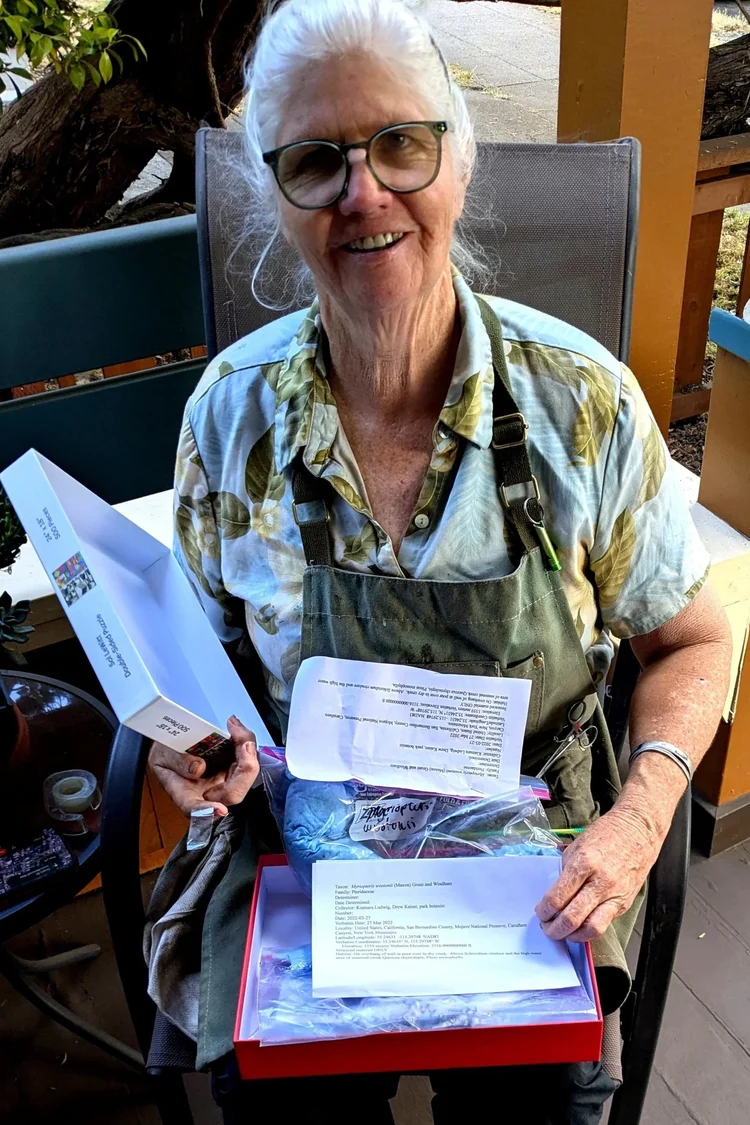
Kiamara carefully prepared special travel pouches for three of the rare desert ferns and delivered them to us along with detailed instructions: once we landed in Denver, we were to use a straw she provided to gently blow air into each pouch to refresh the ferns. She packed the pouches into a small box for safe carrying and delivery.

At DBG, horticulturist Laura Swain met us and received the ferns. We then delivered them to Brooke Palmer, the DBG horticulturist who oversees the fern collection. Kiamara is working with Brooke on fern-growing protocols.

Laura then led us on a wonderful behind-the-scenes tour of many of DBG’s specialty areas, including their herbarium and the Mordecai Children’s Garden. During our visit, we even got caught in a brief but intense afternoon downpour inside the Children’s Garden greenhouse —a refreshing surprise on an otherwise sunny day.

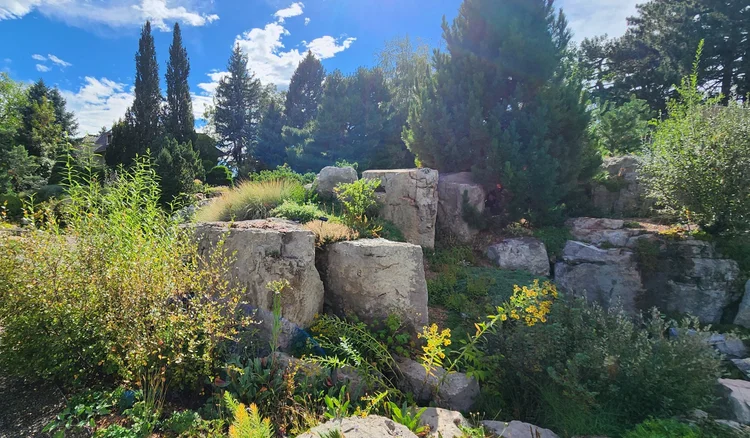
After the rain cleared, we explored several areas on our own, including DBG’s Rock Alpine Garden, which helped inspire our own Crevice Garden at RPBG. DBG’s alpine collection features more than 2,000 species of plants gathered from high-elevation regions around the world—a truly remarkable display of botanical diversity.

With a wide range of specialty gardens displaying plants from all over the world, two restaurants, two art galleries, and a small film theater, the 24-acre York Street DBG is well worth a visit. Friends of the Regional Parks Botanic Garden have free, reciprocal admission privileges at the DBG, as well as at hundreds of additional North American botanic gardens (here is a list and map of participating gardens from the American Horticultural Society).

For those interested, Laura Swain, DBG horticulturist, discusses sustainable landscape practices for the Colorado region in the YouTube video Right Plant, Right Place...Right Practice! which features many views of the DBG.

TOP: Views of the York Street Denver Botanic Gardens.

BOTTOM, left: Kiamara Ludwig with fern package.

BOTTOM, right: David Sherertz presenting ferns to Laura Swain.

David Sherertz is Chair of the RPBG Friends Leadership Council and has been a  docent at the Garden for 14 years. This past year, David concluded a Fiscal Sponsorship Agreement between the Friends and the Regional Parks Foundation, which had been needed but not formalized for 30 years. David is now helping plan the celebratory events for the 30th anniversary of the Friends of the RPBG in 2026.

Photos by Roz Hardy.


Weekly and Monthly Plant Sales: Dudleyas

Rosalie Gonzales

The October 4 Fall plant sale at the Garden was the most successful ever! If you missed the sale or need additional plants, there is a wide selection available, propagated from the Garden’s stock. Sales are held at the Garden potting shed on Wednesdays, 10:00 a.m. to 12:00 noon, and on the first Saturday of every month, 10:00 a.m. to 2:00 p.m. Enter the Garden through the West gate on Anza View Road.

Current inventory is available on the Garden website.

Featured this month: Dudleyas

Thanks to the efforts of propagator Susan Ashley, the Garden has a variety of Dudleya species available for sale. These hardy succulents in the Crassulaceae family need little to no water in summer. They do appreciate well-draining soil, and make good container and rock garden plants. If planted in a container, be sure the soil in the container drains well and they get regular but light water in summer. Don’t let water pool around their stems. Their flowers are a favorite nectar source for hummingbirds and species with yellow flowers also attract bees. We have lots of them, mostly in 2” pots, ready to be planted out!

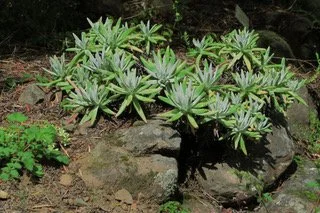
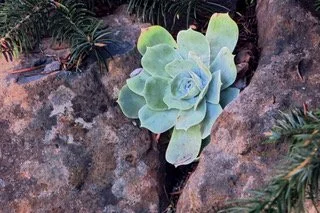
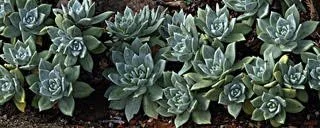
A few of the available species are pictured below; additional species are listed in the current inventory.

Catalina Island liveforever (Dudleya virens supsp. hassei). This liveforever is known for its branching habit which makes it a good ground cover dudleya. It is native to Santa Catalina Island. While preferring well draining soil, it has a tolerance for heavier soils.

Chalk dudleya (Dudleya pulverulenta). The rosettes of this liveforever can grow up to 2 feet wide and display broad, chalky leaves. Its tall spikes produce tubular red flowers. It grows naturally along the California coast from Monterey County to Baja.

Powdery liveforever (Dudleya farinosa). Native to coastal areas in Northern and Central California, this liveforever has thick, oval shaped, gray green leaves. Red flower spikes with yellow flowers appear in early summer. Leaves often have a powdery coating. It can form mats, making it a useful ground cover. This special form is from the Noyo River on the Mendocino coast.

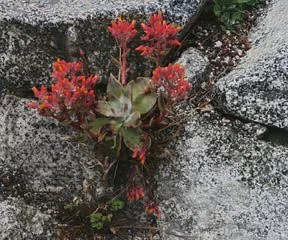
Canyon liveforever (Dudleya cymosa). This distinctive succulent sends up erect red-orange stems from a gray-green basal rosette. The stems are topped with small red flowers in clusters. It’s considered one of the showiest of the dudleyas. It grows widely throughout California in high elevation rocky outcrops, chaparral and oak woodlands.

Photos by John Rusk.

Rosalie Gonzales is a long-time docent and propagator at the Botanic Garden. Rosalie is also Chair of the Membership Committee of the Friends of the RPBG.


Garden Tours and Sights

You're invited to our free, docent-guided tours every weekend and on Park District holidays! Tours are scheduled on Saturdays and Park District holidays at 2:00 p.m., and on Sundays at 11:00 a.m. and 2:00 p.m. There will be a 2:00 p.m. tour on Tuesday, November 11, Veterans Day. Meet at the Visitor Center, no need to sign up. Please remember, if it's raining, we'll have to cancel.

Visiting with children? The Garden is a magical place for kids. Stop at the greeter table to pick up an I-Spy or Treasure Hunt game for the young ones to play in the Garden.

The Garden is closed on Thursday, November 27, for the Thanksgiving holiday.

Below are a few of the fall features in the Botanic Garden.

Vine maple (Acer circinatum).

Blackfruit dogwood (Cornus sessilis).

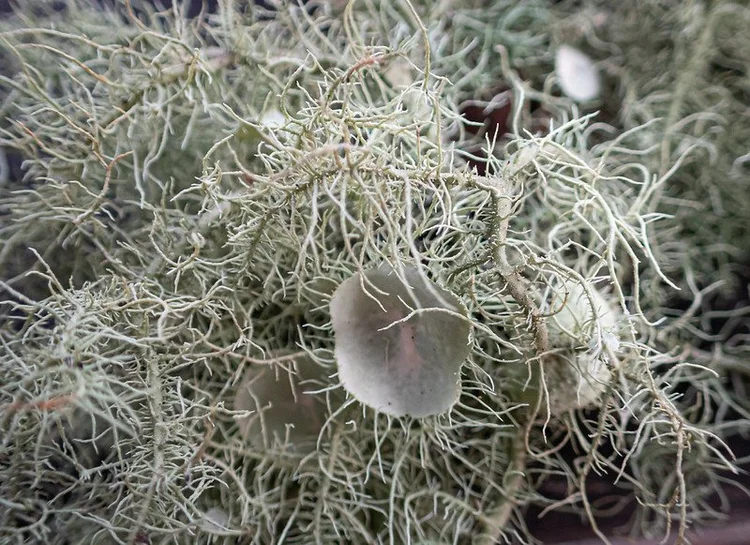
Western bushy beard lichen (Usnea intermedia).

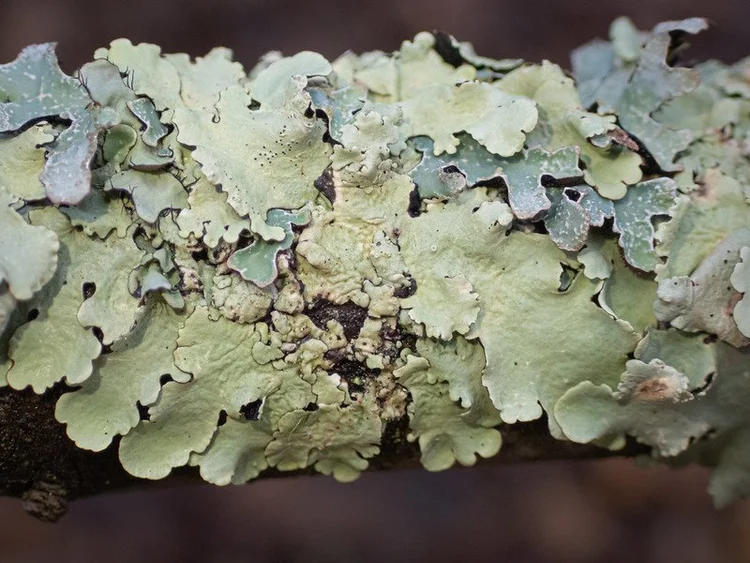
Common greenshield lichen (Flavoparmelia caperata).

Photos by Sandy Steinman.


  JOIN    •    DONATE

Copyright © 2025 Friends of the Regional Parks Botanic Garden, All rights reserved.

facebook instagram flickr youtube
nativeplants.org

Regional Parks Botanic Garden, 1550 Wildcat Canyon Rd., Berkeley, CA, 94708

Unsubscribe