Butterfly walks, and so much in bloom! ͏ ͏ ͏ ͏ ͏ ͏ ͏ ͏ ͏ ͏ ͏ ͏ ͏ ͏ ͏ ͏ ͏ ͏ ͏ ͏ ͏ ͏ ͏ ͏ ͏ ͏ ͏ ͏ ͏ ͏ ͏ ͏ ͏ ͏ ͏ ͏ ͏ ͏ ͏ ͏ ͏ ͏ ͏ ͏ ͏ ͏ ͏ ͏ ͏ ͏ ͏ ͏ ͏ ͏ ͏ ͏ ͏ ͏ ͏ ͏ ͏ ͏ ͏ ͏ ͏ ͏ ͏ ͏ ͏ ͏ ͏ ͏ ͏ ͏ ͏ ͏ ͏ ͏ ͏ ͏ ͏ ͏ ͏ ͏ ͏ ͏ ͏ ͏ ͏ ͏ ͏ ͏ ͏ ͏ ͏ ͏ ͏ ͏ ͏ ͏ ͏ ͏ ͏ ͏ ͏ ͏ ͏ ͏ ͏ ͏ ͏ ͏ ͏ ͏ ͏ ͏ ͏ ͏ ͏ ͏ ͏ ͏ ͏ ͏ ͏ ͏ ͏ ͏ ͏ ͏ ͏ ͏ ͏ ͏ ͏ ͏ ͏ ͏ ͏ ͏ ͏ ͏ ͏ ͏ ͏ ͏ ͏ ͏ ͏ ͏ ͏ ͏ ͏ ͏ ͏ ͏ ͏ ͏ ͏ ͏ ͏ ͏ ͏ ͏ ͏ ͏ ͏ ͏ ͏ ͏ ͏ ͏ ͏ ͏ ͏ ͏ ͏ ͏ ͏ ͏ ͏ ͏ ͏ ͏ ͏ ͏ ͏ ͏ ͏ ͏ ͏ ͏ ͏ ͏ ͏ ͏ ͏ ͏ ͏ ͏ ͏ ͏ ͏ ͏ ͏ ͏ ͏ ͏ ͏ ͏ ͏ ͏ ͏ ͏ ͏ ͏ ͏ ͏ ͏ ͏ ͏ ͏ ͏ ͏ ͏ ͏ ͏ ͏ ͏ ͏ ͏ ͏ ͏ ͏ ͏ ͏ ͏ ͏ ͏ ͏ ͏ ͏ ͏ ͏ ͏ ͏ ͏ ͏ ͏ ͏ ͏ ͏ ͏ ͏ ͏
Friends of the Regional Parks Botanic Garden

THE BOTANIC GARDEN NEWSLETTER
April 2026

  • Butterfly Walks - Free and Open to the Public

  • California Native Plants at the John Muir Historic Site

  • New Pollinator I-Spy game for Kids

  • Next Manzanita Issue: Milkweeds II

  • Spring Plant Sales at the Garden

  • Free Garden Tours

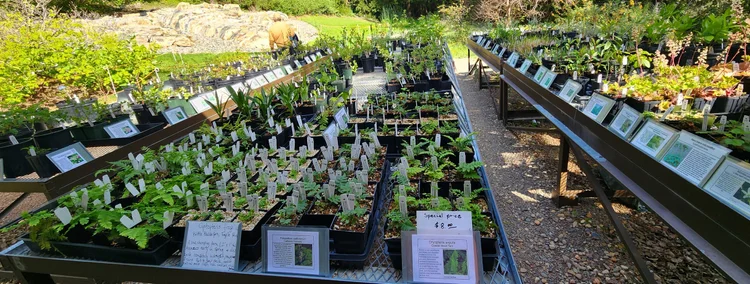
Photo: Garden view by Roz Hardy.


Butterfly Walks

Join Sarab Seth, the Butterfly Guy, for guided butterfly walks in the Botanic Garden. The first butterfly walks of the season will take place on Sunday, April 19, at 1:00 p.m. and 2:15 p.m. Walks are free, but reservations are required. Each walk is limited to 10 participants, and we meet near the main entrance. Signup HERE.

From Sarab’s Notebook:

The wonderfully warm March weather has provided a sensational start to the butterfly season. Last year at this time, five or six species were seen during one hour in the Garden. This season, 13 or 14 species have been sighted in the same period!

I expect we will see at least eight or nine species during our one-hour walks. Apart from the butterflies listed below, likely sightings include cabbage white (Pieris rapae), echo azure (Celastrina echo), mourning cloak (Nymphalis antiopa), painted lady (Vanessa cardui), and sara orangetip (Anthocharis sara). There is some chance of seeing northern checkerspot (Chlosyne palla) and variable checkerspot (Euphydryas chalcedon) caterpillars.

Painted ladies are more abundant this year due to the larger-than-normal annual migration from the northern Mexican deserts to the northwestern Pacific coast.

The best spots right now for butterfly sightings are:

  • Around the large circular bed in the Channel Island section. In particular, look for western brown elfin (Callophrys augustinus iroides) and western pine elfin (Callophrys eryphon) on the big Santa Cruz Island manzanita due north of the circular bed. The pine elfin is the real prize; it is not easily seen in our local area and will only be around through April.

  • At and near the ninebark (Physocarpus capitatus) bush that has just come into bloom on the northwestern edge of the Antioch Dunes section. Look for northern checkerspot (Chlosyne palla) perched on the ninebark and mylitta crescent (Phyciodes mylitta) in the Antioch Dunes bed closest to the ninebark.

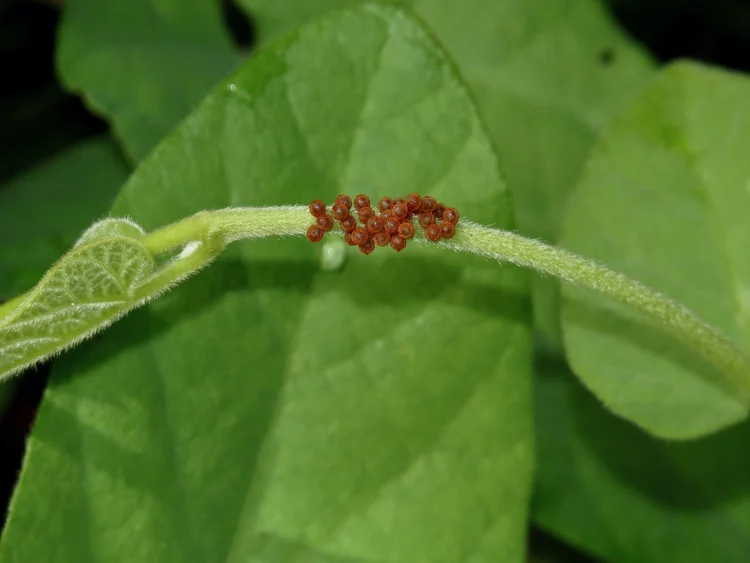
  • Look for California pipevine swallowtails (Battus philenor hirsuta) around the California pipevine (Aristolochia californica) that spreads out over a large area just east of the long bridge. There will be females close to the ground going about their extended egg-laying process (full description here: https://nativeplants.org/california-pipevine-swallowtail), as well as courting pairs flying close together sampling each other’s pheromones. Look near the tips of young shoots growing close to the ground for eggs. Caterpillars should start to appear soon.

Tip: Binoculars help a lot, especially close-focus ones.The happiest people at the end of the walk are usually the ones who brought them! For a preview, see butterfly pages on the Garden website.

Western pine elfin.

California pipevine swallowtail eggs.

California pipevine swallowtail.

Photos by Sarab Seth.

Sarab Seth is a butterfly photographer and docent at the Botanic Garden. Sarab's monthly Garden butterfly walks will continue through October.


California Native Plants at the John Muir Historic Site

By Linda Vida and Elaine Jackson

The John Muir National Historic Site (JMHS) in Martinez, California, is more than just a tribute to the “Father of the National Parks”— it is a living classroom of California’s botanical heritage. While the site is famous for Muir’s Victorian home and the fruit orchards that sustained his family, the surrounding native garden offers a vibrant celebration of the state’s native flora. For those who love the beauty of the Regional Parks Botanic Garden (RPBG) in Tilden, a visit to Muir’s home feels like seeing those same botanical friends in another setting.

Twenty years ago, Keith Park, National Park Service arborist and botanist, collaborated with a troop of Eagle Scouts to expand the existing garden by removing turf grass and planting California native plants. The result is an all-California native garden surrounding the visitor center. The garden focusses on the local native plants found along the trails in the Bay Area Hills.

A group of five to seven dedicated volunteers lovingly tend to the garden every Monday morning with Elaine Jackson, who worked on the original plantings with the late native landscape designer, Greg Wolford. The JMHS website highlights some of the native plants found in the garden.

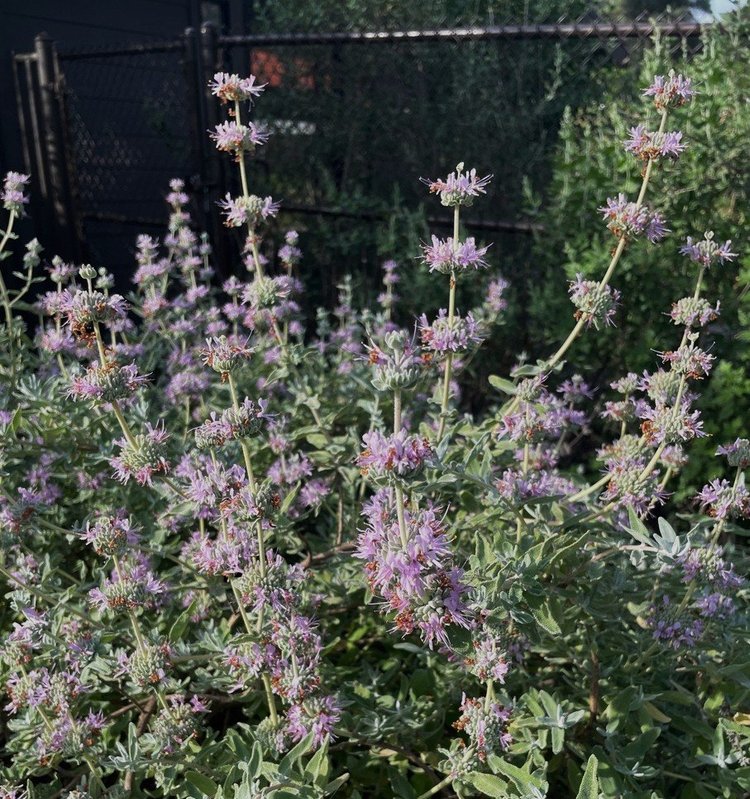
Above are a few of the many species that can be viewed at both the JMHS and the RPBG. LEFT: Redbud (Cercis occidentalis); CENTER: Checkerbloom (Sidalcea malviflora subsp. malviflora); RIGHT: Purple sage (Salvia leucophylla). Photos by Elaine Jackson.

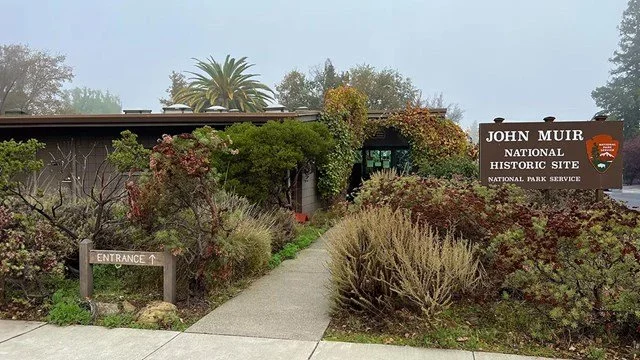
A photo of the native garden at the entrance to the JMHS.

John Muir National Historic Site Visitor Center & Main Park Grounds, 4202 Alhambra Ave., Martinez, CA 94553. Free admission. Open Tuesday through Saturday, 10:00 a.m. to 5:00 p.m.; closed Sundays and Mondays. Website: https://www.nps.gov/jomu/index.htm

Photo: National Park Service.

Linda Vida is President of the John Muir Association and a frequent visitor to the RPBG. Elaine Jackson is with the East Bay Chapter of the California Native Plant Society.


New I-Spy Game for Kids

There is a new game for young Garden visitors to enjoy. Developed by our Garden Greeter team in collaboration with pollinator expert May Chen, the Pollinator I-Spy game celebrates the beneficial insects and birds that can be viewed in the Garden. And—visitors receive a prize when the game is finished! Games are available at the Greeter table on weekends and holidays.

The variety of games available can be viewed on the Garden website.


Next Manzanita Issue: Milkweeds II

The next issue of the Garden’s quarterly journal, Manzanita, will soon be mailed to all members of the Friends of the Garden.

If you’re not already a member, consider joining and supporting the Friends of the Garden. Go to the Garden website to see how the Friends’ activities support the Garden and to learn about the many benefits that come with a Garden membership.

Annual memberships in various categories start at $30 per year.


Spring Plant Sales at the Garden

Our highly successful weekly and monthly plant sales at the Garden will continue through Saturday, June 6. Please note: there will be no big April spring sale this year and no monthly plant sale on Saturday, May 2 (the date of the Bringing Back the Natives tour). Propagators will be concentrating on increasing inventory for the Fall Plant Sale, which will be Saturday, October 3.

Plant sales are held on Wednesdays, 10:00 a.m.–12:00 p.m., and the first Saturday of the month 10:00 a.m.–2:00 p.m., except as noted above. Current plant inventory is available on the Garden website.

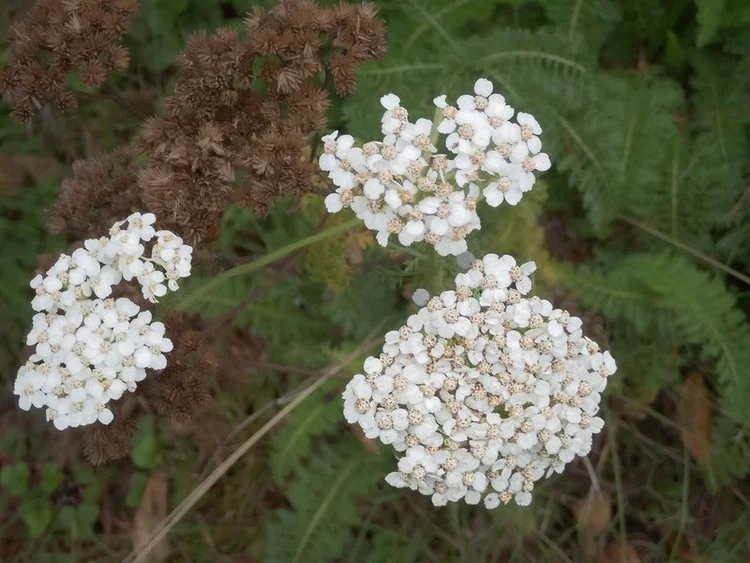
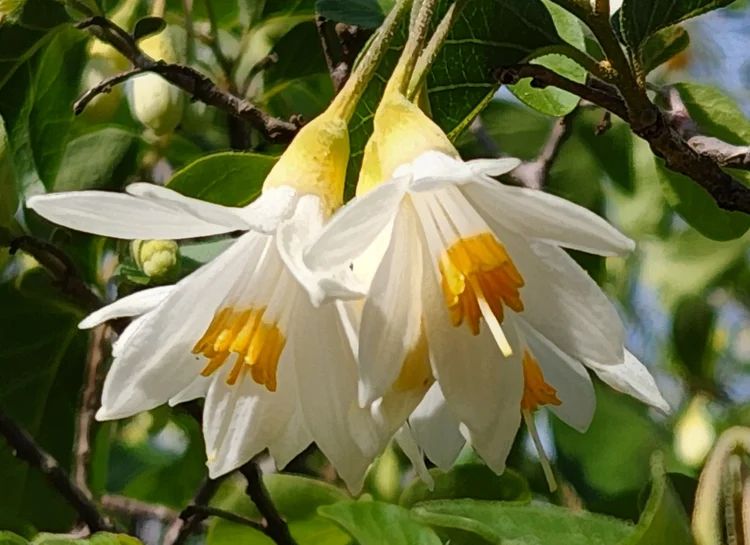
Specially featured this month: yarrow and spice bush.

Yarrow (Achillea millefolium) is an all-star, popular plant choice among California native gardeners, including beginners! It is durable and easy to grow in a wide range of soil types and has low moisture requirements. It reseeds and spreads quickly, making it a good groundcover plant for lawn replacement. Yarrow's abundant white flowers attract bees, butterflies, and other insects. Achillea is specially priced at $5.00 for a three-inch pot.

Spice bush (Calycanthus occidentalis) is a deciduous shrub with bright green leaves and unusual lotus-shaped red flowers that can resemble a small magnolia flower. The flowers are strongly scented with a wine-like fragrance, and appear from late spring through early autumn.

Left alone, it will become a large, rounded shrub three to 13 feet tall and three to 12 feet wide. Trimmed, it can become a multi-trunked small tree.

Part-shade is ideal for this plant but it tolerates full sun if given lots of moisture in somewhat cooler areas. It accepts full shade but will grow more slowly with a more open habit.

Descriptions from Calscape. Photos by Sandy Steinman.


Free Garden Tours

You're invited to our free, docent-guided tours every weekend and on Park District holidays! Explore the Garden sights with us on Saturdays and Park District holidays at 2:00 p.m. and on Sundays at 11:00 a.m. and 2:00 p.m. Meet at the Visitor Center; no need to sign up. Please remember, if it's raining, we'll have to cancel. 

Bring your group to the Garden! Signup for free group tours on the Garden website.

Plants are bursting into bloom at the Garden now; enjoy these sights, and more on your next visit:

Pacific dogwood (Cornus nuttalii).

Snowdrop bush (Styrax redivivus).

Siskiyou Lewisia, Siskiyou Bitter-root (Lewisia cotyledon).

Photos by Roz Hardy.


  JOIN    •    DONATE

Copyright © 2026 Friends of the Regional Parks Botanic Garden, All rights reserved.

facebook instagram flickr youtube
nativeplants.org

Regional Parks Botanic Garden, 1550 Wildcat Canyon Rd., Berkeley, CA, 94708

Unsubscribe