|
Fall Plant Sale: Saturday, October 4 ͏ ͏ ͏ ͏ ͏ ͏ ͏ ͏ ͏ ͏ ͏ ͏ ͏ ͏ ͏ ͏ ͏ ͏ ͏ ͏ ͏ ͏ ͏ ͏ ͏ ͏ ͏ ͏ ͏ ͏ ͏ ͏ ͏ ͏ ͏ ͏ ͏ ͏ ͏ ͏ ͏ ͏ ͏ ͏ ͏ ͏ ͏ ͏ ͏ ͏ ͏ ͏ ͏ ͏ ͏ ͏ ͏ ͏ ͏ ͏ ͏ ͏ ͏ ͏ ͏ ͏ ͏ ͏ ͏ ͏ ͏ ͏ ͏ ͏ ͏ ͏ ͏ ͏ ͏ ͏ ͏ ͏ ͏ ͏ ͏ ͏ ͏ ͏ ͏ ͏ ͏ ͏ ͏ ͏ ͏ ͏ ͏ ͏ ͏ ͏ ͏ ͏ ͏ ͏ ͏ ͏ ͏ ͏ ͏ ͏ ͏ ͏ ͏ ͏ ͏ ͏ ͏ ͏ ͏ ͏ ͏ ͏ ͏ ͏ ͏ ͏ ͏ ͏ ͏ ͏ ͏ ͏ ͏ ͏ ͏ ͏ ͏ ͏ ͏ ͏ ͏ ͏ ͏ ͏ ͏ ͏ ͏ ͏ ͏ ͏ ͏ ͏ ͏ ͏ ͏ ͏ ͏ ͏ ͏ ͏ ͏ ͏ ͏ ͏ ͏ ͏ ͏ ͏ ͏ ͏ ͏ ͏ ͏ ͏ ͏ ͏ ͏ ͏ ͏ ͏ ͏ ͏ ͏ ͏ ͏ ͏ ͏ ͏ ͏ ͏ ͏ ͏ ͏ ͏ ͏ ͏ ͏ ͏ ͏ ͏ ͏ ͏ ͏ ͏ ͏ ͏ ͏ ͏ ͏ ͏ ͏ ͏ ͏ ͏ ͏ ͏ ͏ ͏ ͏ ͏ ͏ ͏ ͏ ͏ ͏ ͏ ͏ ͏ ͏ ͏ ͏ ͏ ͏ ͏ ͏ ͏ ͏ ͏ ͏ ͏ ͏ ͏ ͏ ͏ ͏ ͏ ͏ ͏ ͏ ͏ ͏ ͏ ͏ ͏ ͏
Fall Plant Sale Saturday, October 4 Classes: World in Your Garden; Soaproot Brush Making Become a Garden Greeter Volunteer October Butterfly Walks Focus: Washington Fan Palm November 1: Wayne Roderick Lecture Series Begins October in the Botanic Garden
Photo: Vine Maple (Acer circinatum) by Sandy Steinman.
|
Annual Fall Plant Sale Saturday, October 4Public sale hours are 10:00 a.m. to 2:00 p.m., with exclusive access for Friends members starting at 9:00 a.m. Friends memberships may be purchased at the Garden starting at 8:30 a.m. on the day of the sale, or in advance on the Garden website. Become a Friends member and get early access at 9:00 a.m. |
|

|
|
|
There will be many unusual ferns in the sale, including some we’ve never had before! Some highlights of the sale include: Coastal woodfern (Dryopteris arguta), Cobb Mountain lupine (Lupinus sericatus), Pallid manzanita (Arctostaphylos pallida), and Red columbine (Aquilegia formosa). The plant list for the sale is available on the Garden website.
|
Classes at the Regional Parks Botanic Garden
|
|
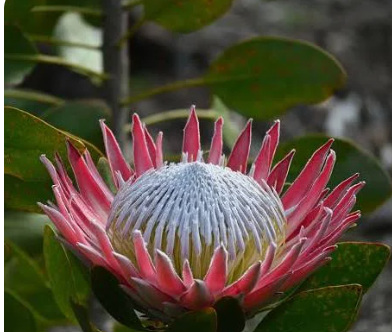
Sundays October 12 and 19, and November 2, 9, 16, and 23, 10:00 a.m.–12:00 p.m. Botanic Garden Visitor Center Learn about the parts of the world where the non-native plants in our gardens come from. At each of the six sessions the focus will be on plants from one of the following areas: Europe, Australia, Asia, Africa, New Zealand and the Mediterranean. Instructor Glenn Keator is a botanist, teacher, and writer specializing in California native plants. Dr. Keator has been the principal teacher for the docent training classes at the Botanic Garden and has taught at several venues around the San Francisco Bay Area. $150.00
|
|
|
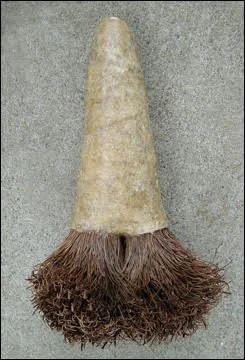
Saturday October 18, 9:30 a.m.–3:00 p.m. Experience the skill of making your own soaproot brush. Making soaproot brushes from start to finish is a lengthy process. Due to the long drying time of each layer needed for soaproot paste to create the handle, each participant will take home additional paste to complete the handle at home. For participants 18 years and up. Instructor Dino Labiste received his academic degree at California College of the Arts. Dino teaches classes on indigenous skills, Stone Age technology, and wilderness survival competence through his "Skills of the Past" workshops, which include wild plant gathering and usage, fire making, and plant fiber cordage. $45.00
|
|
|
|
Garden Greeter Volunteers NeededIt is great fun to welcome our visitors as a Garden Greeter. Most of our visitors are new to the Garden and welcome a friendly face and a brief introduction. The kids love the ISpy and Treasure Hunt games we offer them. Would you like to be more involved with the Botanic Garden on weekends? Our next Garden Greeter Training will take place on two Saturdays, November 1 and 8 (both dates required), from 3:00 p.m. to 5:00 p.m. each day. If you would like to know more, please contact the Greeter Coordinator, Holly Haugh, at greeter_coordinator@nativeplants.org Come join our enthusiastic crew of volunteers!
|
|
October Butterfly WalksJoin Sarab Seth, the Butterfly Guy, for guided butterfly walks in the Botanic Garden. The October walks will take place on Saturday, October 18, at 1:00 p.m. and 2:15 p.m. These will be the last butterfly walks of 2025; the walks will resume in April 2026. Walks are free, but reservations are required. Each walk is limited to 10 participants, and we meet near the Garden’s main entrance on Wildcat Road. Sign up here. |
|
|
|
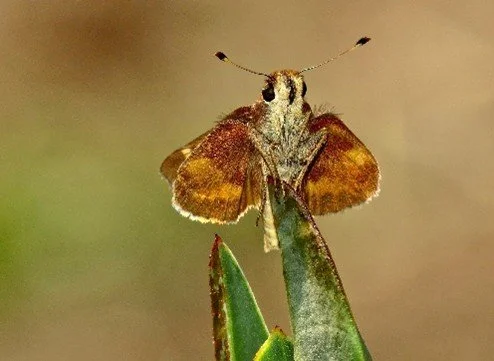
From Sarab’s Notebook: Butterflies bounced back nicely in September, after a somewhat dismal summer. Hopefully, the October walks will be well attended by butterflies! We should have 7 or 8 species, with likely sightings including cabbage white (Pieris rapae), fiery skipper (Hylephila phyleus), mylitta crescent (Phyciodes mylitta), field crescent (Phyciodes pulchella), umber skipper (Lon melane) and woodland skipper (Ochlodes sylvanoides). Where to look (if you can’t join the walks) The best spots right now are: • The Santa Susana tarplant (Deinandra minthornii) near the entrance, for fiery skipper, umber skipper, woodland skipper. • The large patch of asters below the Sea Bluff end of the long bridge, for all the six species listed above. Tip: Binoculars help a lot, especially close-focus ones. The happiest walkers are usually the ones who bring them! Want a preview? See the butterfly pages on the Garden website at: https://nativeplants.org/guides/butterflies-in-the-garden Photo above:Umber skipper (Lon melane) by Sarab Seth.
|
Desert Survivor: The California Fan Palm (Washingtonia filifera)Text and photos by Ted Nirgiotis. Palm trees are a quintessential image of California in the common imagination. Many people visualize the palm-lined streets of Los Angeles or palms along the beaches of San Diego when thinking of our state. They are sometimes surprised to learn that there is only a single species of palm that is native to California, namely the California Fan Palm (Washingtonia filifera), and that palms were originally not very common in most of our state. Visitors to the Regional Parks Botanic Garden will spy two specimens of our fascinating native palm straight ahead of them in bed 6 when they enter the Garden. One tree is mature, collected east of Indio in Riverside County and added to the collection in 1958, and is quite tall. At its foot is a younger tree germinated from seed that was collected east of the Salton Sea in 2006 and planted in 2008.
|

|
Washingtonia filifera in the Regional Parks Botanic Garden. |
|
|
|
The native range of the California fan palm is limited to 118 small, isolated groves in the western Sonoran Desert of southern California; western Arizona; and northern Baja California, Mexico. Usually found in oases, these trees prefer locations where ground water is abundant, such as in narrow canyons or places where faulting has occurred. The species is one of the most northerly-occurring members of the palm family, the Arecaceae, which comprises more than 2600 species. Most palms are found in tropical and subtropical parts of the world.
|
Mountain Palm Oasis in Anza-Borrego State Park, San Diego County. |
|

|
|
|
Indigenous peoples, such as the Cahuilla of the southern California desert, have not only used the tree for various purposes for millenia, but likely played a role in its dispersal among the suitable oases of the region. Other, non-native, palm species have also been planted in California since the early days of the European occupation. Spanish missionaries brought non-endemic palm trees to Southern California in the 18th century. One hardy introduced species that is now familiar, including here in the Bay Area, is the Canary Island Date Palm (Phoenix canariensis). As real estate developers sought to portray California as a paradise for newcomers, they planted numerous Mexican fan palms (Washingtonia robusta), now the most common palm in California. The Californian and Mexican fan palms belong to the genus Washingtonia (named by the German botanist Hermann Wendland, an admirer of our first president), and are very similar. They both are used in landscaping, but the Mexican species (W. robusta) can tolerate wetter conditions and more prolonged spells of cold, which is why it is more favored for horticulture than our native W. filifera. The Mexican species also grows faster and taller than its California cousin. Starting in the 1930s, thousands of Mexican fan palms were planted in Southern California and are now an iconic part of the urban landscape. In its native habitat, the California fan palm is usually found in groves clustered around a spring or water course. These oases form lush patches of greenery amid the arid surroundings. Washingtonia filfera is exceedingly well adapted to its severe desert environment.
|
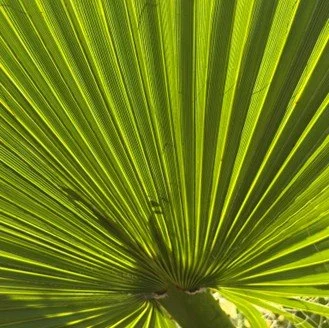
The shape of the leaves ensures efficient capturing of sunlight, while also favoring air circulation. A waxy cuticle layer reduces water loss through transpiration. Being divided into tilted segments allows the leaves to fold and become streamlined during high winds. RIGHT: Tilted segments of the palmately-shaped leaves. |
|
|
|
|
Longitudinal fibers strengthen the leaves. These fibers peel off around the edges of the leaves and curl, giving this palm its species name, filifera, meaning thread-bearing. The threads are the favorite nest-building material of hooded orioles, which use the fibers, along with grass, to weave very sturdy nests that hang from the leaves. Native palm oases are a haven for diverse plant and animal life in the desert, providing shelter and food to animals such as bighorn sheep and coyotes, to Gambel’s quail and other birds, and to tree frogs, western yellow bats, and various snakes and lizards. The giant palm-boring beetle lives only in the trunks of mature trees and is actually a sign of a thriving ecosystem, serving to renew the groves.
|

|
LEFT: Characteristic “thread-bearing” look of Washingtonia filifera leaves. |
|
|
The strong trunks can store both starch and water. They are also fire-resistant. The oases are fire-adapted ecosystems. Fires burn the skirts and other vegetation, clearing the way for a new generation of palm seedlings that require sunlight to grow and providing nutrient recycling for the new seedlings to take advantage of. They have extensive root systems, which stabilize the tree and seek out water. These palms have the unusual habit of not dropping dead leaves, but allowing them to hang in bushy skirts around the trunk. Known by botanists as marcescence, this adaptation likely provides insulation to the trunk and prevents water loss. RIGHT: California fan palms with their bases in spring water and showing characteristic skirts of dead leaves. |
|

|
|

|
The petioles connecting the leaf to the stem are armed with sharp spines to protect the leaves when the palm is young and within reach of herbivores. Being monocots (plants whose seeds have one embryonic leaf), palms are more closely related to grasses, lilies, and onions than to traditional “trees” such as oaks and pines, which are dicots. One consequence of being a monocot is that palms grow from an apical bud at their top. As they grow, they continue to get taller, but the trunks don’t get much wider and don’t branch out. LEFT: Leaf petioles with spines emerging from the apex of younger Washingtonia filifera at the EBRPBG. |
|
|
|
The endemic occurrences of the California fan palm are relatively few and scattered. For many years Washingtonia filifera was presumed to be a “relict,” meaning a remnant of what was once a more widespread plant. Many sources still describe the California fan palm as a survivor from a much wetter and greener era that retreated to oases as the climate dried. However, the evidence for this history, such as the fossils, genetic analysis, and historical records, is not conclusive, and an alternate view has been proposed by the botanist James W. Cornett. He suggests that this species may have been introduced by native peoples and be a more recently evolved species. For more on this debate see: https://macskamoksha.com/2017/03/did-native-americans-introduce-fan-palms-california. Traditionally, the fan palm is a very important tree to the indigenous people of Southern California’s Sonoran Desert. The Cahuilla have used the fan palm for a wide variety of purposes. The fruits can be eaten fresh or dried and stored. The seeds can be ground into a flour. The leaves can be used for clothing, sandals, thatching, and basketry. The range of Washingtonia filifera seems to be limited, in part, by not being well adapted to cooler and more humid climates. For example, the reason a second specimen was planted in the Regional Parks Botanic Garden is that the original, larger tree most likely has the fungal disease diamond scale, which is relatively mild but causes early frond death and limits growth. Washingtonia filifera is particularly prone to this fungal infection in areas where fog is common. Washingtonia robusta happens to be more resistant. The International Union for the Conservation of Nature (IUCN) lists Washingtonia filifera as a species of “least concern,” since the populations in the native oases are mostly either stable or increasing, and it is also being conserved outside its endemic region. In our Regional Parks Botanic Garden, the two specimens are surviving at the northern edge of the climatic zone in which they can flourish. The gardener in charge of the Southern California section, Marcus Tamura, deep-waters the palms about once a week to simulate the seeps and springs where they normally grow and keeps a close eye on their health. Through conservation efforts, such as at our botanic garden and elsewhere, as well as through protection of the endemic ocurrences in the oases of Southern California, the California fan palm has a chance to survive the changing conditions on our earth, at least in the short term. Ted Nirgiotis is a docent at the Regional Parks Botanic Garden. A retired mathematics professor, he has a life-long interest in natural history, especially that of California. He is the co-author of No More Dodos: How Zoos Help Save Endangered Wildlife.
|
Wayne Roderick Lecture Series Begins November 1Join us for our popular Wayne Roderick Lecture series on a broad array of topics related to plants and natural history. Named in honor of its founder, the Wayne Roderick Lecture Series takes place on most Saturday mornings, November through February, starting at 10:30 a.m. in the Botanic Garden Visitor Center auditorium. These presentations are enjoyable for beginners and professionals alike. All lectures are free and open to the public.
|
|
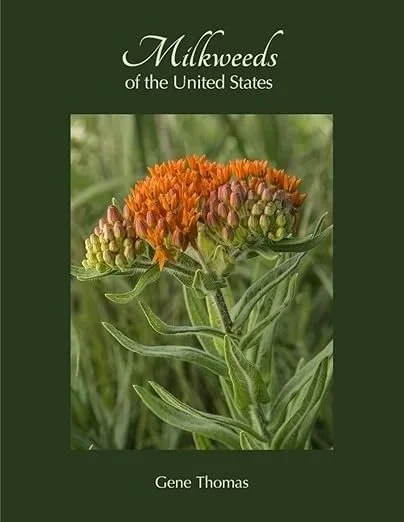
Saturday, November 1: Bart O’Brien, Director of the Regional Parks Botanic Garden, speaking on a topic to be announced! Saturday, November 8: Gene Thomas, speaking about his recent book, Milkweeds of the United States. Future talks will be listed on the Garden website in the coming weeks.
Please join us for these talks! |
|
|
Free Botanic Garden ToursYou're invited to our free, docent-guided tours every weekend and on Park District holidays. Explore the Garden sights with us on Saturdays and Park District holidays at 2:00 p.m., and on Sundays at 11:00 a.m. and 2:00 p.m. Meet at the Visitor Center, no need to sign up. Please remember, if it's raining, we'll have to cancel. Below are a few of the October sights in the Botanic Garden. Photos by Sandy Steinman.
|

|
|
Leathery polypody (Polypodium scouleri) |
|
|
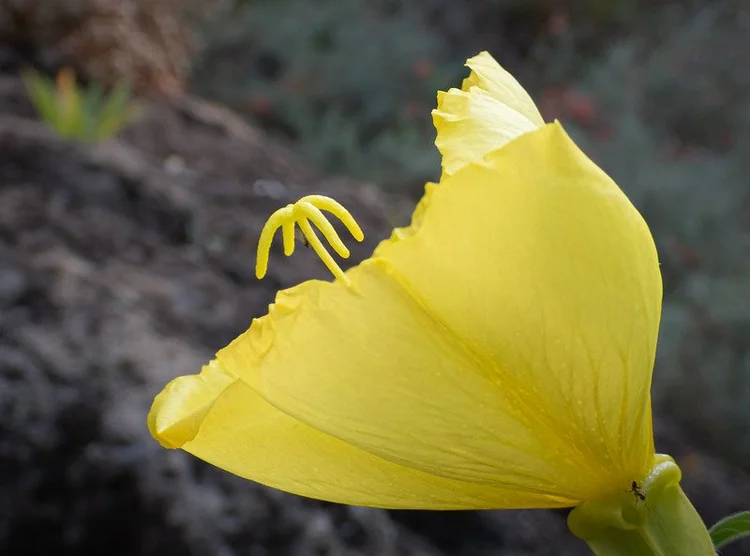
Hooker’s evening primrose (Oenothera elata ssp. hirsutissima) |
|
|
|
|
|
|
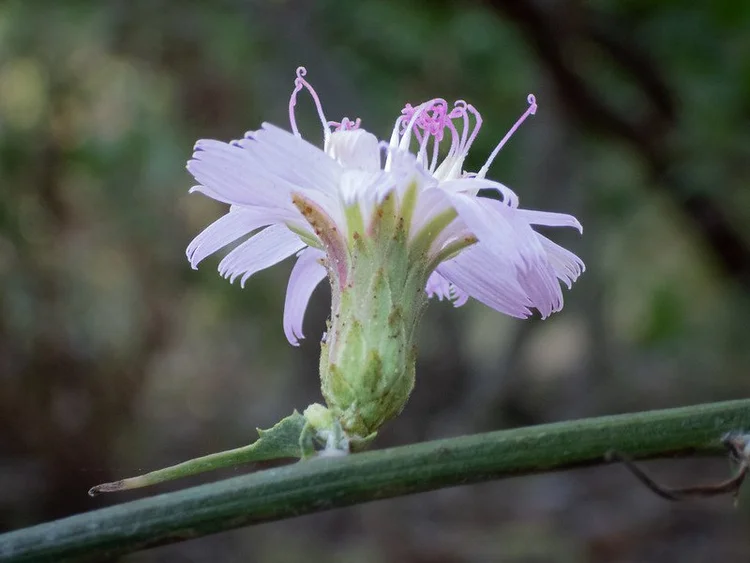
Fort Tejon Milk Aster (Stephanomeria cichoriacea) |
|
|
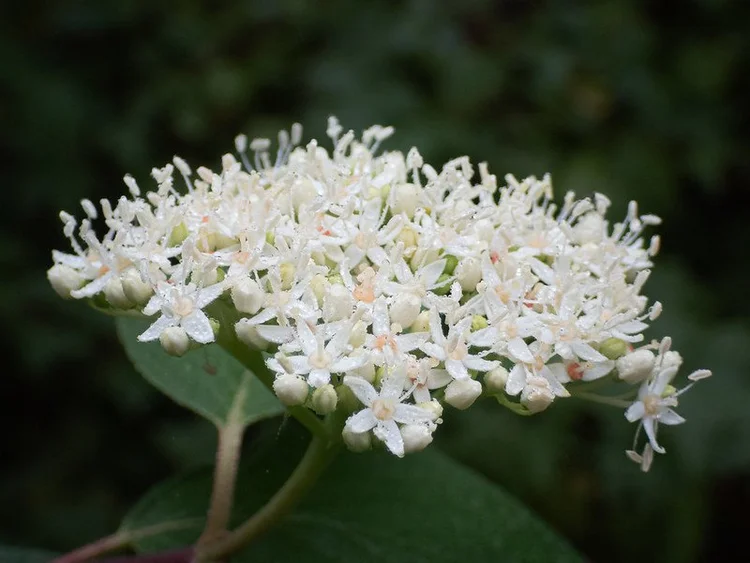
American Dogwood (Cornus sericea ssp. sericea) |
|
|
|
|
|
|
|



